STRATEGY. CUSTOMER EXPERIENCE. GROWTH.
I help small businesses get more clients, improve how the business runs, create a better customer experience, and grow profitably.
WHY GOOD BUSINESSES GET STUCK
Most businesses do not struggle because they lack ideas.
They struggle because the direction is unclear, attention is scattered, promising opportunities are underdeveloped, and the customer experience has grown in pieces rather than as a whole.
That's where I come in...
01
The real problem has not been identified
Time and money are spent fixing symptoms while the underlying issue or opportunity remains untouched.
02
Everything feels equally important
Too many ideas, priorities, and opportunities compete for limited attention, so the things with the greatest potential never get enough focus.
03
The customer journey has grown by accident
The website, communications, systems, handoffs, and follow-up may each work separately, but not as one clear, coherent experience.
04
The plan stops at the big idea
The direction may sound good, but nobody has translated it into practical actions, ownership, decisions, and next steps.
HOW I CAN HELP
Four ways to work together
For established small businesses with something to fix, improve, implement, or grow. No more wasting time on the wrong solution.
01
BUSINESS CLARITY INTENSIVE
When you know something is wrong, but you’re not sure what or where to start.
Diagnose the business broadly, pinpoint the real issues, and leave with a prioritized action plan.
02
CUSTOMER JOURNEY REVIEW
When the business is working, but a specific journey, offer, or growth opportunity could be performing better.
Review one primary customer journey, find the biggest friction and opportunities, and build a focused 30-day action plan.
03
30 DAY GROWTH RESET
When you know what needs to change and want help putting it into action.
Implement the highest-priority improvements, coordinate the work, test what’s working, and measure progress over a focused 30-day sprint.
04
FRACTIONAL LEADERSHIP
When the direction is clear, but the work needs strong senior ownership.
Lead the initiative, align people, manage execution, and keep progress moving without the commitment of a full-time hire.
JUST BECAUSE WE CAN DOESN’T MEAN WE SHOULD.
AI thinks all your ideas
are good.
I’m a little more
discerning.
Start with the real question.
Before we rebuild, rebrand, buy software or spend more on marketing, make sure we are solving the right problem.
Challenge the obvious answer.
The first solution is not always the best one. I will ask what is driving the issue, what else might be true, and what we are assuming.
Then get to work.
Once the direction makes sense with a clear ROI, we refine the strategy, build the plan, and move forward into action.
Work Example: Construction Business
"We need more sales."
ORIGINAL ASK: Implement software + get more clients
A construction business originally brought me in to implement new project-management software, then asked me to help generate more clients.
But once I got inside the business, it became clear that neither was the right place to start.
That conclusion took more than a quick look. I had to understand how estimates were being built, how information moved from one stage of a job to the next, how decisions were made, where project information lived, who was responsible for what, and where things were falling through the cracks.
What I found was a business with very few consistent processes. Estimating and project information lived in large spreadsheets, responsibilities were often informal, and the owner had become the bottleneck for too many decisions, approvals and pieces of information. New tools were being added in the hope that software itself would create structure.
It wouldn’t.
Before adding more leads, more jobs or more technology, the business first needed a workable operating model.
That meant understanding how the business actually functioned day to day, identifying the steps that mattered, deciding where consistency was necessary and where flexibility was useful, clarifying ownership, and designing a process grounded in how the company really worked, while improving the way work moved through the business.
Only then would it make sense to configure software around that process.
At the same time, I looked at where future growth made the most sense. That included competitive and market research, changing demand, the company’s crew capacity, build times and margins, as well as opportunities created by Vermont’s push to increase housing supply.
Rather than simply pursuing more of the same work, I developed a strategy around panelized homes. They offered shorter build times and lower labor requirements, which made them particularly well suited to the company’s constraints, while also positioning the business around an area of increasing demand.
I also explored how Vermont’s housing goals could create opportunities beyond individual projects, including the potential to become a preferred builder and whether state workforce or business-development programs could help support expansion if the company added crew.
The goal wasn’t simply to find more work. It was to identify the kind of growth the business was actually positioned to handle and benefit from. Diving straight into “we need more sales” would not have solved the problem. It would have exposed it.
Work Example: Wellness Clinic
"We need to grow."
ORIGINAL ASK: HELP THE CLINIC GROW
A wellness clinic brought me in because it wanted to grow.
But before increasing marketing or trying to attract more patients, I needed to understand what the business was really offering, who it was best suited to help, how clearly that value was being communicated, and what happened once someone became interested.
The work started with an in-depth review of the brand and market. I looked at the competitive landscape, the clinic’s existing positioning, how its services were being described, who its strongest-fit patients were, and where there was a genuine opportunity to differentiate in a crowded wellness space.
That work surfaced an important issue: the clinic had valuable expertise and a strong approach, but the offer itself wasn’t packaged in a way that made the value easy for patients to understand.
So the next step was to rethink the service model.
Rather than continuing to sell primarily by the hour, I helped restructure the services into clearer, value-based programs built around patient needs and outcomes. That meant looking at what should be included, how the programs should be positioned, how they should be priced and explained, and how each one fit into the broader business model.
Then we mapped the patient journey from first contact through consultation, onboarding, treatment, communication and follow-up.
That required looking at the experience from both sides: what patients needed to know and feel at each stage, what the clinic team needed internally, where confusion or friction could occur, what should happen manually, and what could be supported or automated by technology.
Only once that journey was clear did it make sense to research and implement the supporting tools, create the patient materials needed at different stages, and establish KPIs so the clinic could track performance and identify where the experience could improve over time.
Once that foundation was in place, the clinic brought me back for a follow-on engagement to create and implement a marketing campaign designed around the clarified positioning, offers and patient journey.
The goal was growth. But growth depended on getting the positioning, offer, patient journey and supporting systems working together first. Driving more people into the business before that foundation was in place would have created more friction, not better results.
Lou is an outstanding leader. She creates a teamwork environment and leads others to excel. She is very well organized, diligent in completion of projects, creative, and a joy to work with.
JEN PFLEGING
I would hire Lou again at any time.
CRAIG GAYDOS
Lou was challenged to manage an extremely unconventional program with diverse participants. She not only proved herself extremely capable of the task professionally, but equally important and instrumental was the group camaraderie and effective teamwork that her good-natured personality and excellent humor elicited.
MICHEAL SHEEHY
Let’s move your business forward.
Have a business idea you want to develop? Struggling to turn interest into sales, or spending too much time on processes that aren’t working? Let’s talk about how to get your business running more smoothly and create a clearer path to growth.
No preparation needed. No obligation.
What this looks like in real life.
01
We have a good offer, but we need more sales.
Maybe the webinar, campaign, referral program, sales process, or funnel is already working—just not as well as it could. I’ll find the weak spots and help you turn more of that interest into leads, sales, and repeat business.
02
Customers keep getting confused or dropping off.
People are interested, but somewhere between discovering you, buying, and becoming a happy customer, things get clunky. We’ll map what’s happening and fix the friction so more people make it through instead of dropping out.
03
We have too many priorities and everything feels urgent.
You have six things you could work on but no clear sense of which will move the business forward. We’ll decide what matters now, what can wait, and what should go so time and resources go to the work with the greatest potential.
04
We’ve got a great idea, but now what?
A new service, program, partnership, or revenue opportunity looks promising, but you do not want to invest blindly. We’ll test the thinking so you can move forward with more confidence and give the opportunity a better chance of succeeding.
05
This project should have been finished months ago.
The website, launch, system, or internal project has stalled because decisions are not being made, ownership is fuzzy, or everyone is overwhelmed. I’ll help untangle it so the project gets finished and starts delivering the value it was meant to.
06
The business has grown, but the way we work hasn’t.
Too much is manual, inconsistent, or dependent on one person. We’ll simplify the process and clarify ownership so the business can grow without adding the same amount of chaos, rework, or owner-dependence.
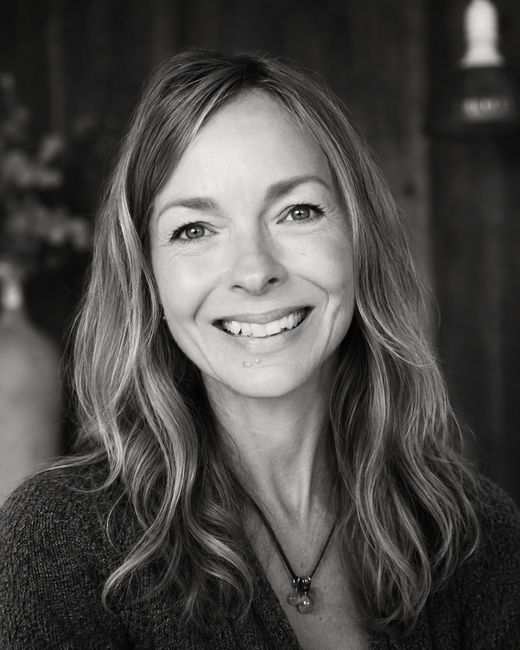
I care deeply about the businesses I work with.
It works best when you do too.
Would we be a good fit?
The best work happens when there is something worth building, and someone genuinely committed to building it.
PASSIONATE & INVESTED
You care about the business, idea, or opportunity and are excited about where it could go.
COMMITTED
You're willing to give the work the time, attention, decisions, and resources it needs - not simply collect another set of recommendations.
OPEN TO CHANGE
You're comfortable having assumptions challenged and willing to change course when something isn't working.
Who I work best with
Founder-led businesses and small leadership teams — large enough to have real customers, moving parts, and opportunities, but small enough to make decisions and actually change things.
Wellness clinics, professional services, construction & trades, agencies, hospitality, specialty retail — and other owner-led businesses with something good to build on.